Thoughts for Symbiosky on Wikisim and Collective Sense-Making
Thanks to @Symbiosky for these thoughtful questions:
How do you want Wikisim to evolve? Who will submit the data, and in what format? GIS data?? What types of questions will be allowed? And what guidelines should be followed when providing solutions?
— Symbiosky (@symbiosky.bsky.social) May 16, 2026 at 11:52 AM
Some thoughts in response
How do you want Wikisim to evolve?
- To be useful for bridging the gap between silos of data and expertise and general public's understanding of a complex system (starting with national energy).
- To be a place where experts¹ can share their models and data and have them validated by others.
Who will submit the data, and in what format? GIS data??
- Anyone can submit data.
- Any format of data should be submissible but so far it seems
the most useful data for simulations is:
- time series (temporal) data
- geospatial data and often geospatial temporal data.
- functions that relate data to each other or other functions and produce useful outputs
What types of questions will be allowed?
- I've started with WikiSim focused on quantitative questions about complex systems. If it proves useful for that domain then I could imagine more qualitative questions and dynamics being modelled. So any question that's related to our understanding of the complex systems that we are part of and depend upon.
And what guidelines should be followed when providing solutions?
- There are only two restrictions: nothing illegal for the UK jurisdiction (though would like to internationalise it to allow for different laws and customs - both more and less restrictive). And secondly nothing immoral - which is of course subjective - so it would be dependent on the community / local communities to decide.
Definitions
Expert
Some more thoughts on WikiSim
WikiSim is early days so there's still a lot of hypothesises to test / questions to answer.
Firstly regarding impact & utility of simulations:
- what impact do simulations have?
- how might people use and related to them?
- could they help bridge between different silos of data, expertise and perspectives?
- can they really help provide a shared model of a complex system? - and importantly
- do experts³ have this perception easily and see themselves in it and see their understanding of a system in a model / simulation?
- if there is significant friction can this be reduced through better design
of intuitive UI/UX and or better onboarding (training)
- obviously if an expert does not see their mental model reflected in the simulation it will be of very little utility. It is expected though that given a sufficiently developed simulation that uses familiar and intuitive UI, UX then this friction can be minimised.
To answer these questions we need one or more minimal viable simulations to test.
Secondly regarding crowd sourced data, models, & simulations:
- could the wiki (wikisim.org) that's powering a model be easier enough for an expert to locate and fix data in it
- what are the different ways we can work together to construct holistic computational models - and thus share mental models - of complex societal questions / opportunities?
- can the Wikipedia model really be copied for this? If the tooling is good enough and the barrier to entry low enough then hopefully yes. But Wikipedia has a very low barrier to entry because it's just flexible text. Until we have language that's flexible enough to accommodate errors whilst precise enough to be useful to build simulations then this is likely to be a very high barrier to entry.
Thirdly, other opportunities:
Whilst building simulations I've realised three things:
loads of data is out there. Many experts must be pulling the same data and running into the same problems of cleaning it, contextualising it. Can we do better at sharing cleaned & contextualised data? Are there existing platforms that could be better leveraged for this like GitHub or Kaggle or something else? Or do we need to build something new?
these experts must be building models, sometimes their conclusions / outputs are public but those models themselves very rarely are made public. So the models are never validated by others, errors fixed, models improved and extended. Lots of waste and opportunity there. Can we build anything to help with that?
there's value accross the whole fractal knowledge tree. As in if you're trying to answer some high level system question like how much solar is there installed in the UK? You will naturally stumble over other interesting data, anecdotes and questions. For example you might realise the largest solar farm in the UK was built in 2025 and covers 6 km2 in Kent, that there's 6 times more area of planned solar farms in the pipeline that we currently have installed, and that the largest in 2020 was "only" 0.7 km2 outside Andover.
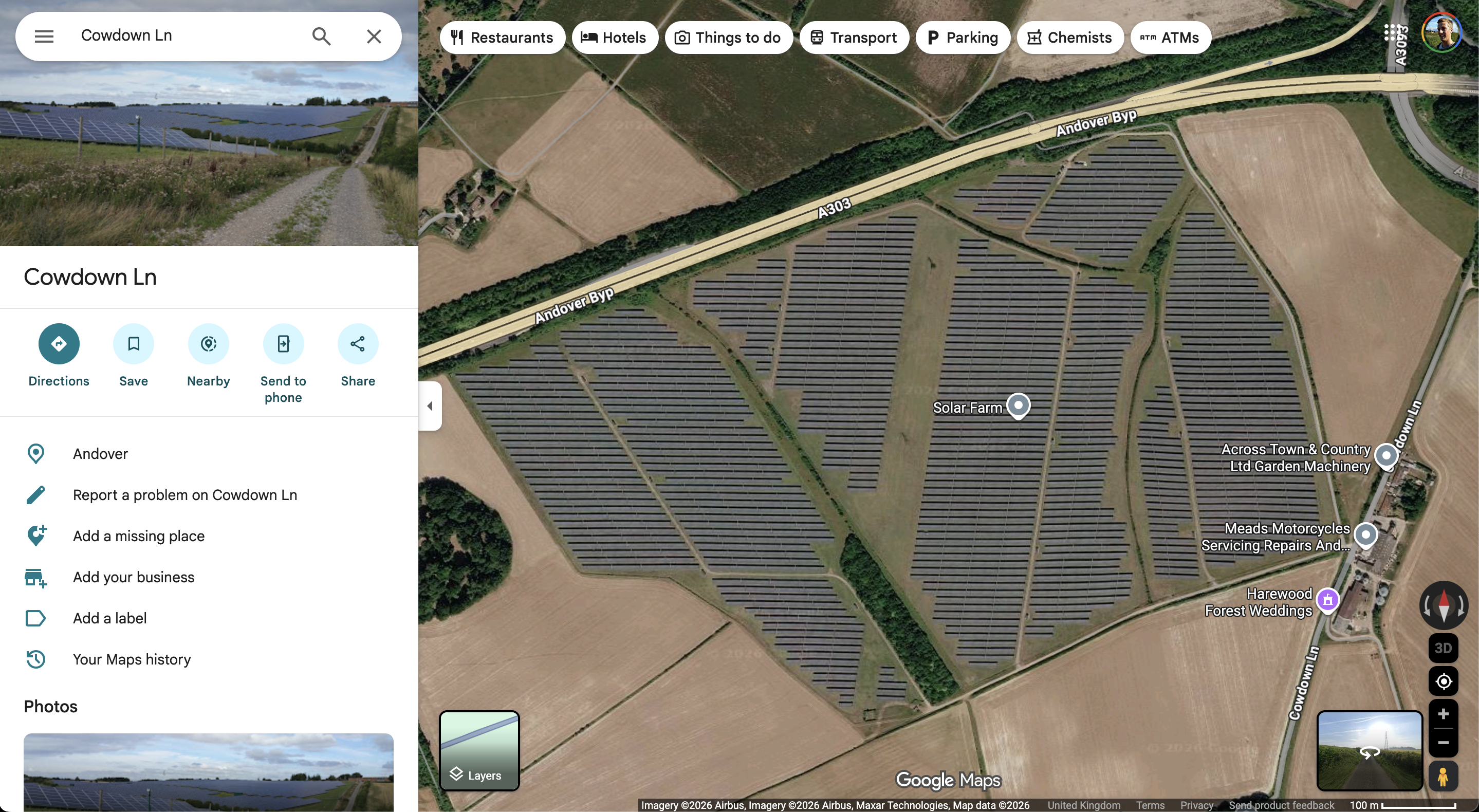 0.7 km2 solar farm near Andover, operational 2020
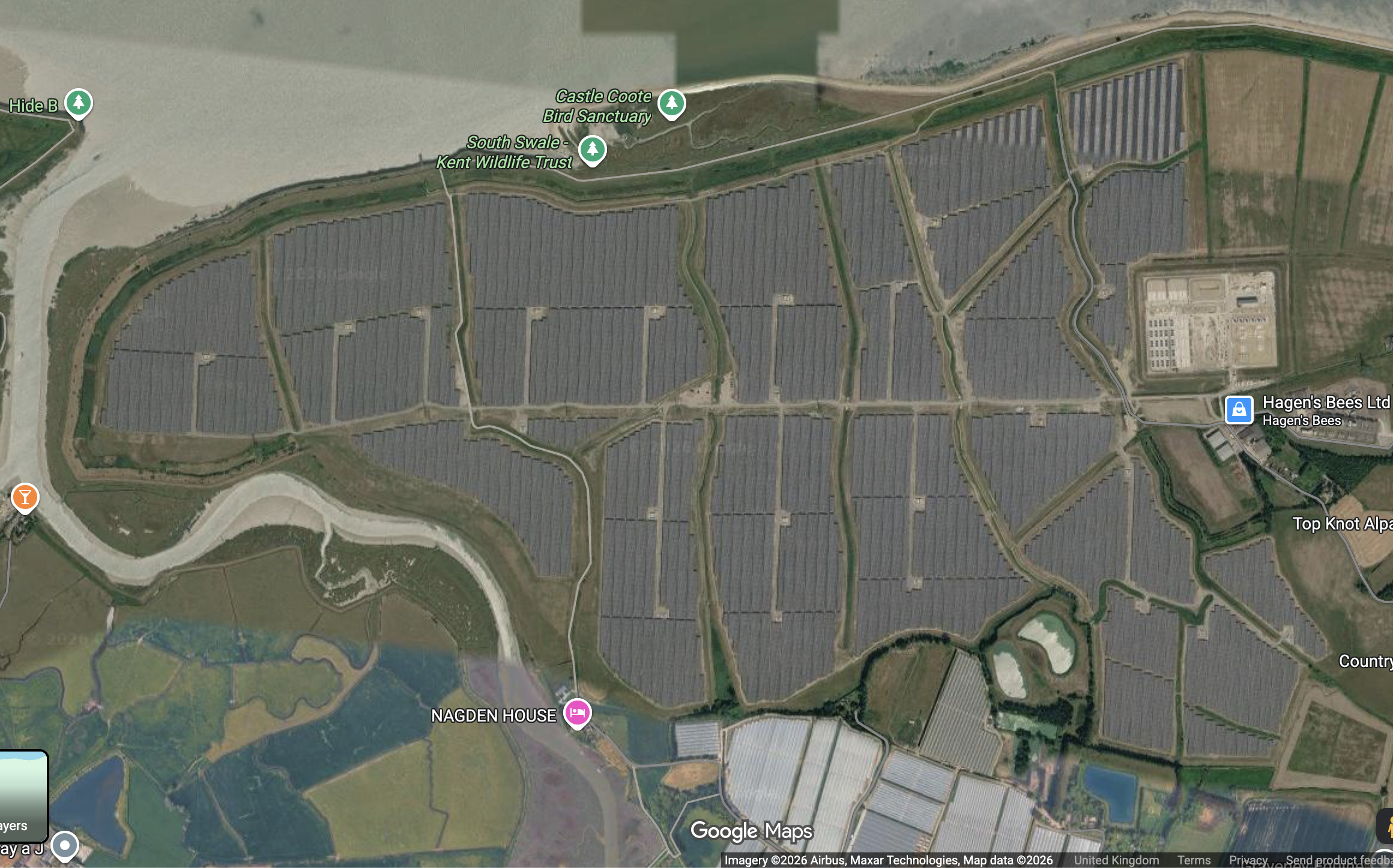 6 km2 solar farm near Kent, operational 2025
So all of these insights are valuable, and whilst making the model to power a simulation there will be more insights from the calculations and their results that are of value to share.
Notes
² One of the largest challenges we face in our society is that we don't value a large range of tasks that we all depend on. A street cleaner and a bin person see, hear and have access to a range of important experiences.
You want to improve our country's independence on precious metals? They're in electronic devices you say? We need to recycle them? Great! Who's doing that? What do they see, what do they say about it?
Something might seem like a great idea but unless we check with the people actually doing the work that idea is likely to fail.